Choosing Between Tarmac, Concrete Or
Permeable Paving
Planning a car park extension used to be a simple “cost per square metre” conversation. Today, it’s a strategic business decision. Between the UK government Net Zero targets, rising maintenance costs, and a growing corporate focus on sustainability, your choice of material impacts your bottom line as much as your reputation.
So, which material wins? This guide breaks down the practical differences between tarmac, concrete and permeable paving.
The Environmental Factor
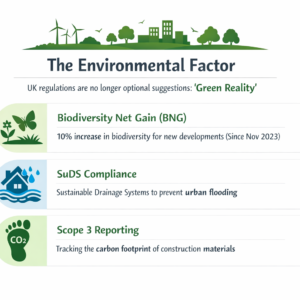
Before looking at the gravel and grit, businesses must face the ‘Green Reality’. UK regulations are no longer optional suggestions:
Biodiversity Net Gain (BNG) Since November 2023, new developments must show a 10% improvement in biodiversity.
SuDS compliance: Local authorities now heavily favour Sustainable Drainage Systems (SuDS) to prevent urban flooding.
Scope 3 Reporting: Large firms must now account for the carbon footprint of their construction materials
The Contenders: Pros and Cons
Tarmac (The ‘Standard’ Choice)
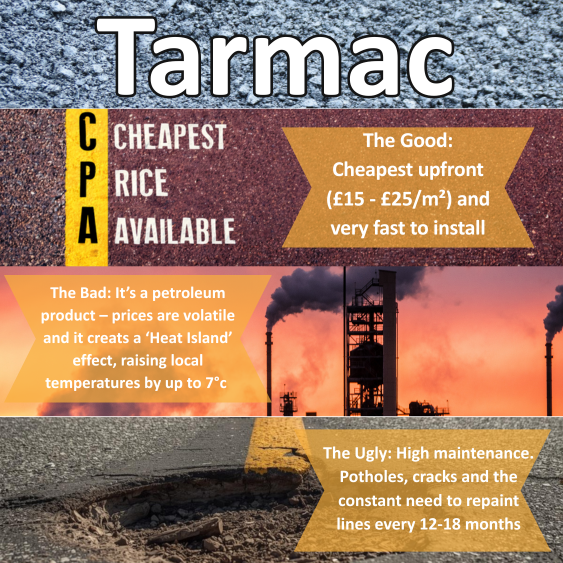
The Good: Cheapest upfront (£15 – £25/m²) and very fast to install
The Bad: It’s a petroleum product – prices are volatile and it creats a ‘Heat Island’ effect, raising local temperatures by up to 7°c
The Ugly: High maintenance. Potholes, cracks and the constant need to repaint lines every 12-18 months
Concrete (The ‘Durable’ Choice)
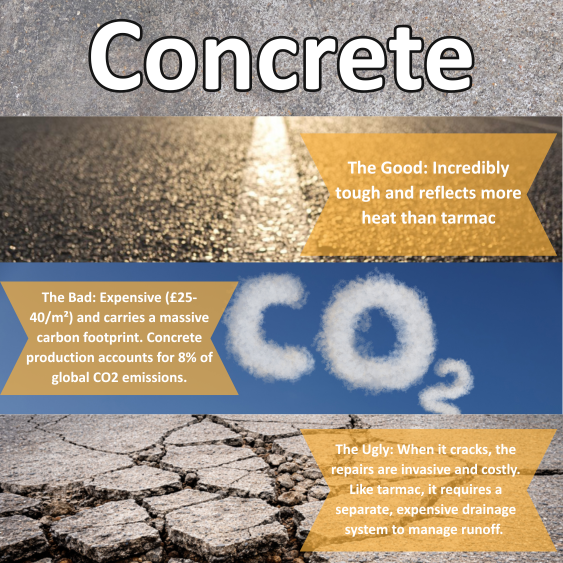
The Good: Incredibly tough and reflects more heat than tarmac
The Bad: Expensive (£25-40/m²) and carries a massive carbon footprint. Concrete production accounts for 8% of global CO2 emissions.
The Ugly: When it cracks, the repairs are invasive and costly. Like tarmac, it requires a separate, expensive drainage system to manage runoff.
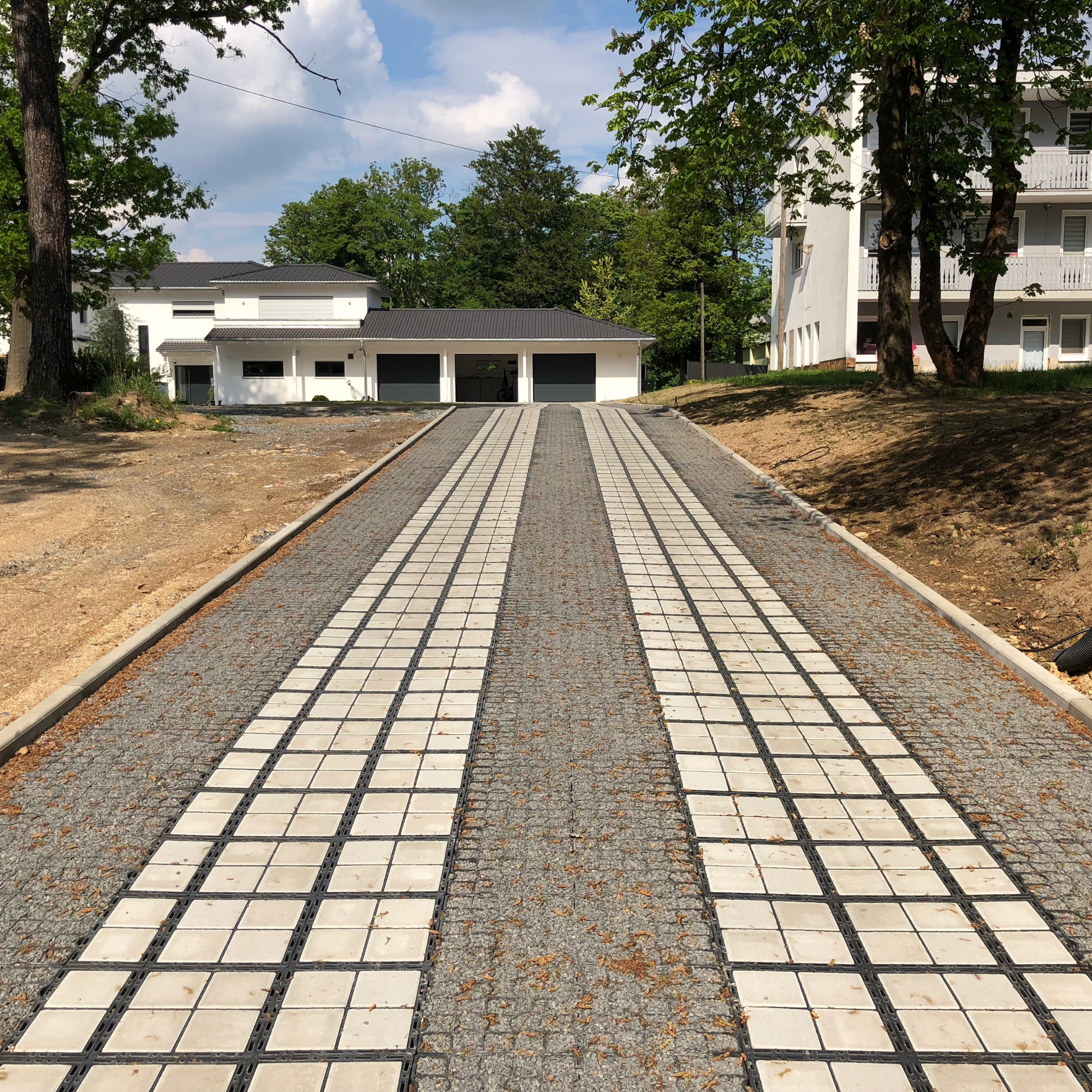
Permeable Paving (The Smart Choice)
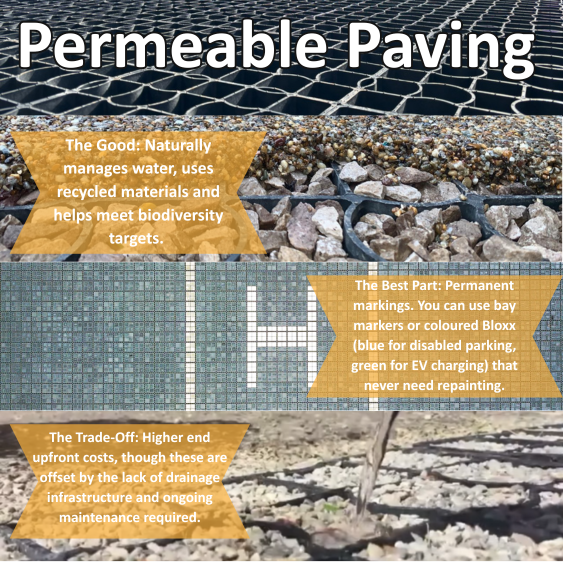
The Good: Naturally manages water, uses recycled materials and helps meet biodiversity targets.
The Best Part: Permanent markings. You can use bay markers or coloured Bloxx (blue for disabled parking, green for EV charging) that never need repainting.
The Trade-Off: Higher end upfront costs, though these are offset by the lack of drainage infrastructure and ongoing maintenance required.
The True Cost:
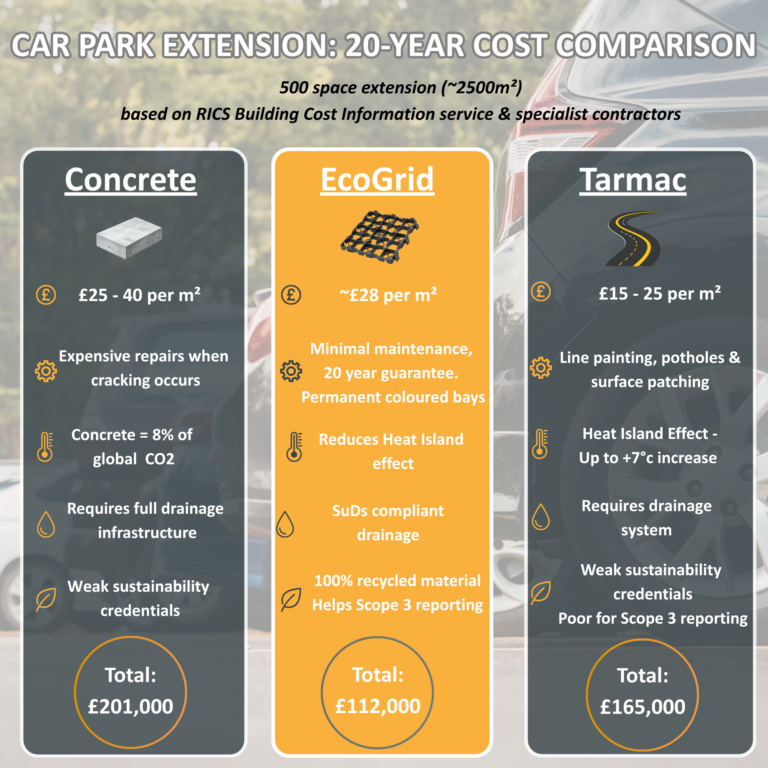
20 Year Projection
Many businesses will make the mistake of looking at Year 1. Looking at a 500 space expansion (~2500m²) over 20 years, the numbers tell a different story:
Choose Tarmac if:
Budget is the only immediate factor: You have a strictly limited upfront budget and are planning to sell the site within 2–3 years.
Short-term focus: You are less concerned with long-term maintenance costs like annual line painting or pothole repairs.
Choose Concrete if:
You prefer traditional high-strength surfaces: You require high load-bearing capacity and are prepared for the higher upfront costs (£25-40 per m²).
Note on Environmental Impact: Be aware that choosing concrete means managing a significant carbon footprint, as concrete production accounts for 8% of global CO2 emissions.
Choose Permeable Paving (EcoGrid) if:
You want the lowest Total Cost of Ownership: You want to save significantly over 20 years (£112,000 vs. £165,500 for tarmac or £201,000 for concrete).
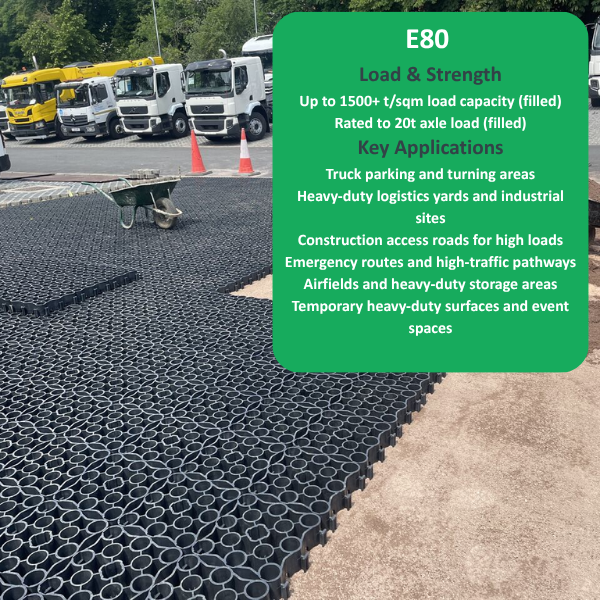
You handle Heavy-Duty traffic: You need a surface that can withstand HGVs and constant tight-turning circles without the cracking associated with concrete.
Compliance is a priority: You need to meet SuDS requirements, achieve 10% Biodiversity Net Gain, or simplify your Scope 3 carbon reporting.
You want “Set and Forget” markings: You want permanent, coloured bay markings for EV or disabled spaces that never need repainting
The Bottom Line
The “old way” of paving (Tarmac) is the most expensive way to manage a facility in 2026. By switching to a permeable system, you aren’t just “being green”—you’re future-proofing your assets against rising maintenance costs and tightening UK regulations.
Is your car park ready for the next decade of UK environmental standards?